But before I get to that, I need to clarify how math is NOT used in sports.

"oh when you shoot the basketball you calculate the path of the trajectory and the force and angles needed to make it go in lolololol"
- Jonathan Love
Yeahhhhh... no. Nope. Sports don't work like that. First of all, just because you can calculate the force and angle doesn't mean you have the hand-eye coordination to produce exactly that force and that angle on demand - but more importantly, even if you could, stopping to calculate at a crucial millisecond is a formula for disaster.
 |
| YES, THIS IS ME, NOW STOP AWWW'ING IT'S GETTING ANNOYING |
This goes for every sport. Hours of repetitive drills is the only way to learn any skill. Whether it be shooting, serving, spiking, batting, passing, dribbling, screening, volleying, throwing, blocking, sprinting, or catching. You don't learn how to do something by calculating how it should work. Even if you completely understood the physics of a basketball shot, that wouldn't help you get a perfect free throw average. You improve your free throw average by working with the ball until it feels like a part of you - so that getting the ball to land in the net is as easy as getting your hand to land on the doorknob to open the door. And until it is that mind-numbingly simple (which it never will be)... you keep training.
So that's where you don't use math in a sports match - when performing specific skills upon an instant. These ought to be things you never think about, let alone calculate.
With that said, let's see where math DOES come in.
TRAINING. Ok... I guess this isn't actually "in the game," but I'm sure there's some quote somewhere about how "the game is won or lost in the weeks leading up to it" or something like that, so technically this is part of the game. Anyways, an athlete has to know exactly what to do in order to best prepare for an upcoming match. Often the required math is left to a trainer or coach - the athletes trust that the coach will come up with a suitable practice schedule and just listen to what they're told to do. But there is math required, whether it's left to the coach or done on one's own - what you need to in order to be in shape by game day. Exercise routines need to be calibrated; nutrition needs to be moderated; there are a lot of things to keep track of, to calculate what's best for you.
Nowhere, I think, is this more evident than in cross country. Maybe I say this just because that's the only high school sport I took part in, so it's the most clear to me there. Maybe I say this just because my coach happened to also work at the school's IT department and so took very well to statistics and times and paces (he even developed an iphone app for keeping score at cross country meets). But whatever the case, math came into our practices and dictated what we did. After every cross country meet, the coach would take our result and calculate a goal time for the next week - our "ice cream time" it was called, because we got a free ice cream bar if we achieved the goal. And his calculation was able to take into account different courses with different difficulties and different lengths and still come up with a reasonable goal to achieve - something that was not out of reach, but still pushed us.
The types of practices we'd have were quite math-driven as well. We would have "jan-ken sprints" (or "rock-paper-scissors sprints") where you'd play rock paper scissors with the coach, and the more times you won in a row, the shorter the distance you'd have to run - and we'd often discuss probability, expectation value, "how far would you run on average" or "worst case" or "best case," and these were taken into account to make sure the practice was a good workout for everyone without killing anyone. We'd do a lot of running for a set time at a set pace (thresholds, my best and worst memory of XC) - the importance being not how far you could get, but whether you could reach the same distance in the same time while always staying below a certain heart rate, even after doing it several times in a row. Great stamina training, and incredibly calculated. The better you were at guessing your pace, and calculating the distance you could run at that pace over a certain period of time, the better runner you could be.
Another thing that must be done in the days leading up to a sports match is examining who you'll be up against. Partly this is done by watching them, but it also involves an analysis of their statistics (discussed in part one of this series). In the case of cross country - which runners should I keep on eye on? Whom should I aim to pass, whom should I try to keep up with? Most of these decisions would be based on their time in previous events, and we'd use these statistics to predict their next performance. This of course can come up in other sports too... which players of a team should you keep an eye out for? Which moves or plays do they tend to use the most? Which team member should mark which opponent? And so on. Again, these are decisions often made by the coaches, but the better the players understand the statistics, the better they'll be able to make similar decisions for themselves.
CURRENT STANDINGS. Now we're in the game; the whistle has blown, the gun has fired, the players are in motion. One thing that is crucial to having a good game is understanding where exactly in the game you are at any point in time. Not just how much time is left, but what the current stats are. Which team is up, and (quick mental subtraction) by how many points? How many players have fouls - who on our team should we be cautious around, who on the other team should we encourage to screw up? What needs to be done in order to do as well as possible from this point on?
Once again, this is quite clear in cross country. One thing many teams have is a coach standing at the mile mark, yelling out the time as each runner passes. "6:42!" I've been taken it too easy... I'll have to push a bit more for the rest of the course. Or maybe "6:08!" Wow, I've really let my adrenaline run away with me, I'm tiring myself out... all right, where's a good pace that will keep me doing well but not kill me? And then instant calculations must be done to compensate and set a good pace. Knowing at what points in the race to push, and at which to coast, do require some basic math. Note that these aren't "instant skills" (which I claimed should not involve math, or any conscious thought), but rather determined decisions which affect the rest of the match. These kinds of long-term decisions, based on current standings, are decisions which do benefit from a bit of math.
The guy in my high school graduating class who won athlete of the year, star of the cross country team and long distance track team, and also a valuable part of the basketball team, also happened to be incredibly quick at math (well, he was just in general an all-around good student, but it's the math part that's important here). As far back as fourth grade, I remember him doing far better than me at the infamous "mad minutes" we had to complete, and ever since then, any time any of us would start asking "so hang on, what's 857 divided by 13..." he'd be the first to come up with the answer. And he would apply math to sports so smoothly, it made you wonder how people who didn't do so well at math managed to succeed in the sport. He had such an intuitive understanding of the relationship between one's mile-time and final result that, if he were watching a race at the mile point, and he knew the past statistics of each player (which he happened to know unbelievably well), he could probably predict the final times of each to within ten seconds (this one might be an exaggeration... but I wouldn't be surprised, he's amazed us in similar ways before). And he knew his own pace really well, so at every point in the race, he'd be exactly as tired as he predicted he would be.
Relating to the previous section on training, this runner was the one trained the most meticulously, always keeping to what was calculated. He knew statistics of other teams like the back of his hand and was consistently able to make accurate predictions of future match results. This is who I think of when I think of math and sports going together. Such an intuitive understanding of the game statistics, and of pace, distance, and time. But this guy wasn't the only one on the team like that, by no means - several runners on our team were similar in their understanding of the numbers. I think this was one thing that allowed our team to do so well in the league despite being from such a small school. We would be able to beat teams from schools three times our size, because we understood the numbers and acted on them. Oh and also just because we have some awesome runners too. Yeah, if you can't tell, I'm pretty proud of my team. d(*⌒▽⌒*)b
So in summary, coming up with a game plan before the game begins is one thing - you have time to think through things, to look at past statistics, to make calm, rational decisions on how to approach the match. But a good athlete is one who can continually update the game plan based on how the game is going - to be able to take stock of where things currently are, and make adjustments as necessary. Throughout any match, you'll be provided with information with how things are playing out - deciding the updated game plan is partly an intuitive "do what feels right" choice, partly a qualitative evaluation of the current situation, but it's also partly mathematical, as you take into account the numbers around you and make some calculations about what this means for how you play throughout the rest of the game.
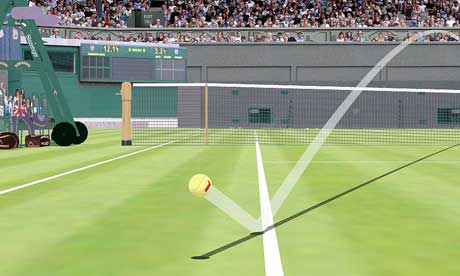 STRATEGIC DECISIONS. As I made clear above, specific skills - shooting a goal, passing to another player, etc. - should not require any thought. But it may well require some thought to decide when to use them - whether to pass or shoot. Or in a sport like tennis, you shouldn't have to think "how do I get the ball to land where I want it to land," but it may be worth thinking "where do I want it to land?" This part definitely varies from sport to sport, and I'm not about to claim that every strategic decision can apply math somehow - most will be very intuitive, based more on experience and a "feel for the game" than an actual mathematical prediction of what an action will result in (for example, I don't think any professional tennis player actually calculates the point on the court at a maximum distance from the opponent in order to aim there; they just know). But whether they keep formulas in their head or not, most good athletes are able to analyze situations and come up with optimal decisions. And this is a mathematical mindset. Math isn't all about knowing formulas - it's about facing a problem, given certain information, and using the information you have to solve the problem. And this is what good athletes do all the time.
The point guard of my high school's basketball team illustrates this point really well. On the one hand, he was just an incredibly technically skilled player - he had put in his hours until basketball came naturally to him. But he also had a sharp eye and a quick mind. First, his sharp eye - he was able to just see things that many people probably wouldn't under the stress of a basketball match (his ability to see more than what most people do also makes this guy an incredibly talented graphic designer, and one of the wittiest people I know). But just because you see all the options doesn't mean you can act on them; this is where his quick mind comes in. He knew the playbook inside and out, and could match any scenario with a play that would fit. In other words, he faced a problem (get the ball into the basket), collected information on the fly (the positions and movements of all other players), and would be able to come up with an optimal solution on the spot. It would be so much fun watching him lead the team, because you'd know you were watching a great mind at work.
Now this point guard wasn't necessarily all that fond of math class, but I would still argue that the type of problem-solving that went through his mind was mathematical. Because the thought process you go through when you see a problem, choose a formula that matches it, and solve the problem using the formula, has very strong connections to the thought process of seeing a problem, choosing a play (like the one on the right) to match the situation, and solve the problem using the play. Plays are essentially formulas in sports - they're a simple set of rules that, given certain conditions, will give you a certain outcome, if you follow the steps correctly. Of course, math is much more than knowing formulas - just like sports is much more than knowing plays. But both math and strategic plays in sports are very much about solving problems, and a mathematical mind knows how to solve problems reeeally well. And how to look for the exceptional cases, the "hidden" options no one else will see or expect; how to carry through any plan consistently; how to settle for nothing less than perfection.
So that's all I have for now. There's probably more to be said... but hopefully my point is clear. Math and sports (like math and anything) are highly interconnected. Definitely not saying that you have to be good at math to be good at sports or appreciate the game; but if you do decide to go after the math, whether you're an athlete, a coach, a manager, or a fan, it unveils a whole new, rich, fascinating layer to the game that could never be truly understood otherwise.
Up next... math and poetry? Maybe some other time.
So that's where you don't use math in a sports match - when performing specific skills upon an instant. These ought to be things you never think about, let alone calculate.
With that said, let's see where math DOES come in.
 |
| "The game is won or lost in the weeks leading up to it." |
Nowhere, I think, is this more evident than in cross country. Maybe I say this just because that's the only high school sport I took part in, so it's the most clear to me there. Maybe I say this just because my coach happened to also work at the school's IT department and so took very well to statistics and times and paces (he even developed an iphone app for keeping score at cross country meets). But whatever the case, math came into our practices and dictated what we did. After every cross country meet, the coach would take our result and calculate a goal time for the next week - our "ice cream time" it was called, because we got a free ice cream bar if we achieved the goal. And his calculation was able to take into account different courses with different difficulties and different lengths and still come up with a reasonable goal to achieve - something that was not out of reach, but still pushed us.
 |
| Coach keeping stats |
Another thing that must be done in the days leading up to a sports match is examining who you'll be up against. Partly this is done by watching them, but it also involves an analysis of their statistics (discussed in part one of this series). In the case of cross country - which runners should I keep on eye on? Whom should I aim to pass, whom should I try to keep up with? Most of these decisions would be based on their time in previous events, and we'd use these statistics to predict their next performance. This of course can come up in other sports too... which players of a team should you keep an eye out for? Which moves or plays do they tend to use the most? Which team member should mark which opponent? And so on. Again, these are decisions often made by the coaches, but the better the players understand the statistics, the better they'll be able to make similar decisions for themselves.
CURRENT STANDINGS. Now we're in the game; the whistle has blown, the gun has fired, the players are in motion. One thing that is crucial to having a good game is understanding where exactly in the game you are at any point in time. Not just how much time is left, but what the current stats are. Which team is up, and (quick mental subtraction) by how many points? How many players have fouls - who on our team should we be cautious around, who on the other team should we encourage to screw up? What needs to be done in order to do as well as possible from this point on?
 |
| Yup, another "me in a sport" picture. Just to make it look more like I know what I'm talking about. :p |
The guy in my high school graduating class who won athlete of the year, star of the cross country team and long distance track team, and also a valuable part of the basketball team, also happened to be incredibly quick at math (well, he was just in general an all-around good student, but it's the math part that's important here). As far back as fourth grade, I remember him doing far better than me at the infamous "mad minutes" we had to complete, and ever since then, any time any of us would start asking "so hang on, what's 857 divided by 13..." he'd be the first to come up with the answer. And he would apply math to sports so smoothly, it made you wonder how people who didn't do so well at math managed to succeed in the sport. He had such an intuitive understanding of the relationship between one's mile-time and final result that, if he were watching a race at the mile point, and he knew the past statistics of each player (which he happened to know unbelievably well), he could probably predict the final times of each to within ten seconds (this one might be an exaggeration... but I wouldn't be surprised, he's amazed us in similar ways before). And he knew his own pace really well, so at every point in the race, he'd be exactly as tired as he predicted he would be.
 |
| Three of the top ten in the league. Not bad. |
So in summary, coming up with a game plan before the game begins is one thing - you have time to think through things, to look at past statistics, to make calm, rational decisions on how to approach the match. But a good athlete is one who can continually update the game plan based on how the game is going - to be able to take stock of where things currently are, and make adjustments as necessary. Throughout any match, you'll be provided with information with how things are playing out - deciding the updated game plan is partly an intuitive "do what feels right" choice, partly a qualitative evaluation of the current situation, but it's also partly mathematical, as you take into account the numbers around you and make some calculations about what this means for how you play throughout the rest of the game.
The point guard of my high school's basketball team illustrates this point really well. On the one hand, he was just an incredibly technically skilled player - he had put in his hours until basketball came naturally to him. But he also had a sharp eye and a quick mind. First, his sharp eye - he was able to just see things that many people probably wouldn't under the stress of a basketball match (his ability to see more than what most people do also makes this guy an incredibly talented graphic designer, and one of the wittiest people I know). But just because you see all the options doesn't mean you can act on them; this is where his quick mind comes in. He knew the playbook inside and out, and could match any scenario with a play that would fit. In other words, he faced a problem (get the ball into the basket), collected information on the fly (the positions and movements of all other players), and would be able to come up with an optimal solution on the spot. It would be so much fun watching him lead the team, because you'd know you were watching a great mind at work.
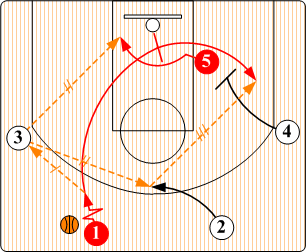 |
| This, believe it or not, is a formula. |
So that's all I have for now. There's probably more to be said... but hopefully my point is clear. Math and sports (like math and anything) are highly interconnected. Definitely not saying that you have to be good at math to be good at sports or appreciate the game; but if you do decide to go after the math, whether you're an athlete, a coach, a manager, or a fan, it unveils a whole new, rich, fascinating layer to the game that could never be truly understood otherwise.
Up next... math and poetry? Maybe some other time.

No comments:
Post a Comment